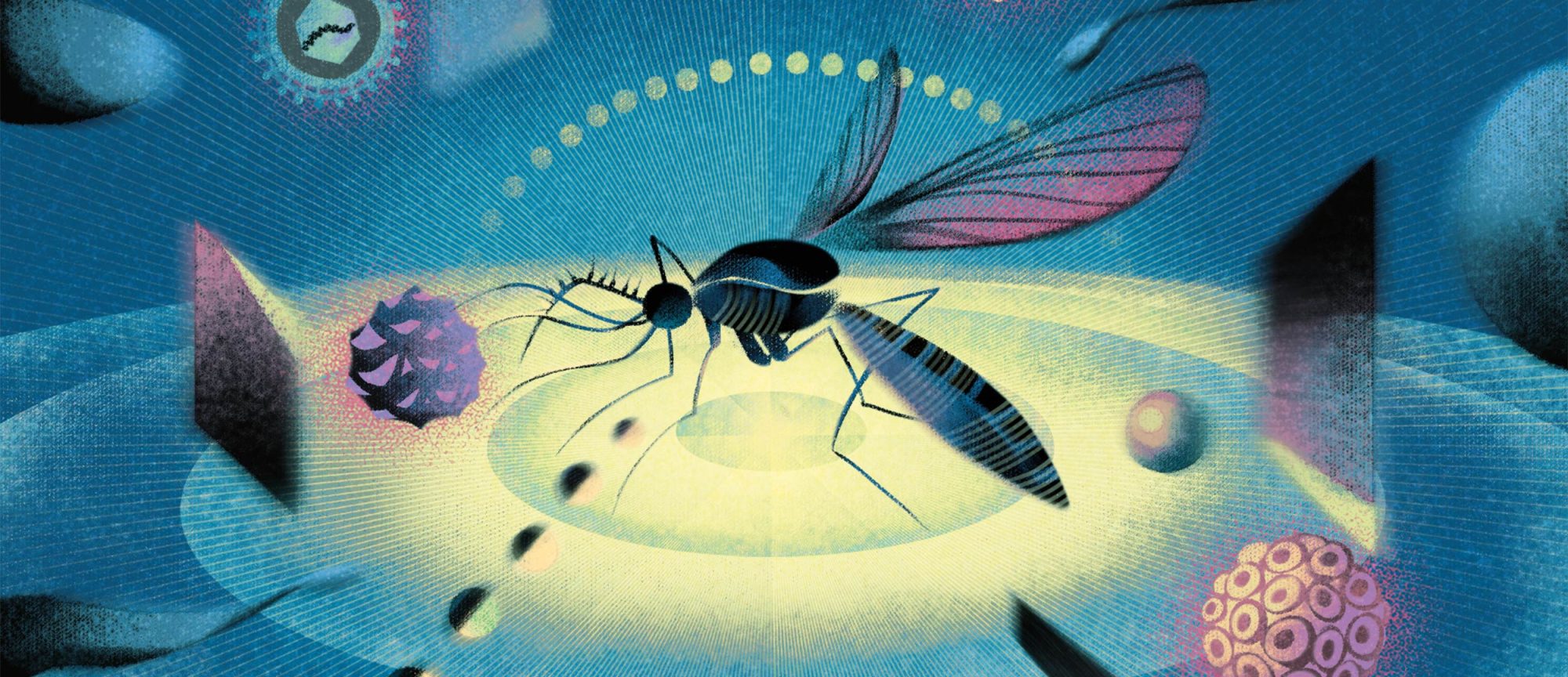
Mosquitoes aren’t just irritating: As the primary vectors for malaria, yellow fever, Zika, and a host of other dangerous viruses, these tiny creatures are by far the most dangerous animals on the planet.
But deep dives into mosquito genetics and behavior by Leslie B. Vosshall’s lab could change that. This year, Vosshall and her colleagues made two major advances: one that corrects a long- standing misconception about mosquito mating and another that reveals the insect’s genetic secrets, cell by cell.
In the first study, postdoc Leah Houri-Zeevi uncovered the first evidence of what happens when a female mosquito chooses to mate for the one and only time in her life: a subtle movement of her genitalia that allows insemination to occur. This places the female firmly in control of copulation—a finding that overturns the decades-old assumption that male mosquitoes run the show.
“It’s really profound that the field assumed for so long that the female must be passive,” Vosshall notes. “Sometimes you need to pick apart an accepted dogma to see if there’s actually evidence to back it up. In this case, there wasn’t.”
In addition to upending decades of conventional wisdom, the discovery also helps explain why some mosquito species are outcompeting others. It could ultimately lead to new ways of interfering with mosquito reproduction, driving down the numbers of these deadly disease vectors. (A single female can lay more than 1,000 eggs over her lifetime.)
Achieving this breakthrough was no mean feat: A mosquito mating lasts for only 14 seconds, and the phase that includes the team’s key finding takes only one or two.
But by combining high-speed cameras, artificial intelligence, and genetically engineered mosquitoes equipped with fluorescent sperm, Houri-Zeevi and her colleagues were ultimately able to determine what leads to a successful coupling: The male inserts structures called gonostyli into the female’s genital tip and vibrates them; if she wants to mate, she elongates her own genital tip, permitting the male to transfer his sperm.
“If she doesn’t make this movement, it doesn’t matter what the male does—no successful mating will occur,” says Houri-Zeevi. “And when previously mated females pair up with a male, no elongation happens. It’s a one-and-done experience for her.”
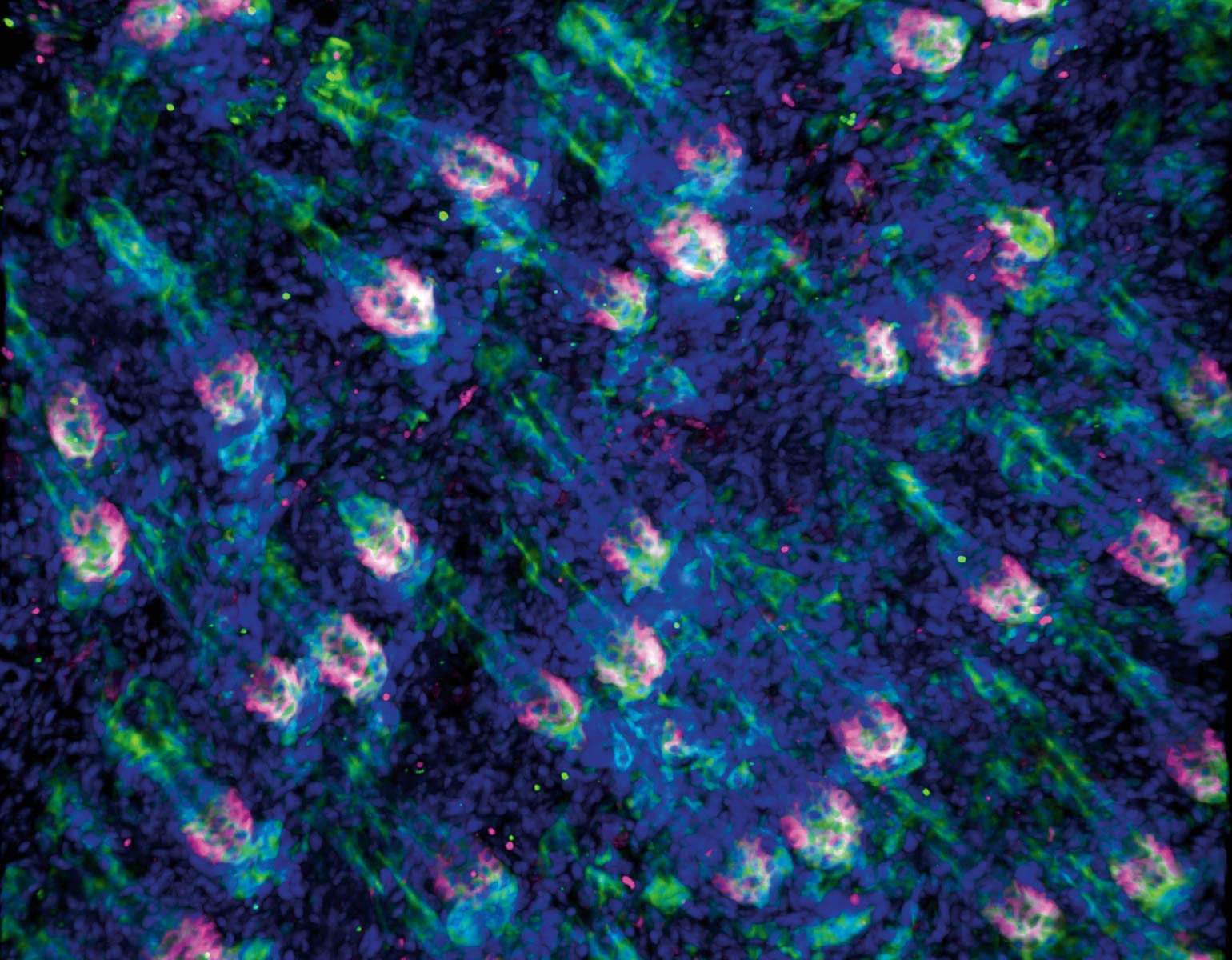
In the second study, Nadav Shai, a senior scientist in the Vosshall lab, led a global collaboration to create the first-ever cellular atlas of Aedes aegypti, which transmits more diseases than any other mosquito. The researchers used single-nucleus RNA sequencing to capture cellular-level gene expression in every single mosquito tissue, from the antennae down to the legs.
“If she doesn’t make this movement, it doesn’t matter what the male does.”
Their approach has already yielded new findings, including the widespread presence of supercharged sensory cells that can detect sweetness and fresh water, among other environmental cues. Disrupting mosquitoes’ ability to detect those cues could help thwart their efforts to feed, breed, and bite.
“Whether they enable them to sense a human to bite, a flower for a sugar source, or a good water source for laying eggs, these multifunctional chemoreceptors are essential to mosquitoes’ survival,” Shai says.
Vosshall and her team hope that the atlas will help scientists around the world generate many more such insights into mosquito biology.
“We’re excited to see the discoveries that will come from it,” Vosshall says.