Feature
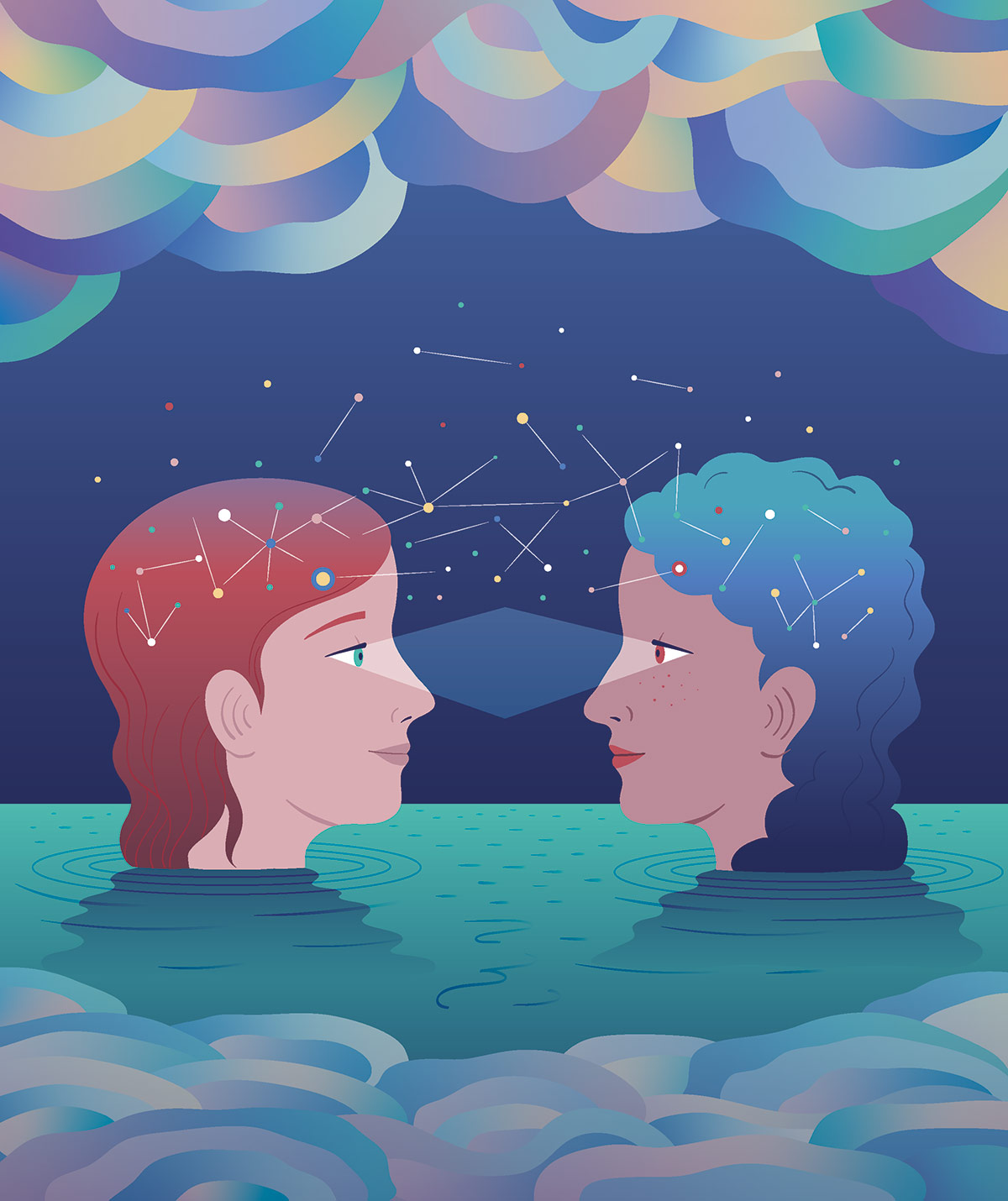
Brains in Conversation
Rockefeller scientists are putting their heads together to learn what drives social behavior
On the edge of a city sidewalk, hundreds of ants march in a line toward an enemy colony’s nest. High above, two birds trade snippets of song back and forth in a call-and-response conversation. On a bench nearby, a mother locks eyes with her baby, and both feel an irresistible pull to smile—a response so automatic it bypasses conscious thought.
These moments, spanning species separated by hundreds of millions of years of evolution, share something fundamental: They are all driven by brains that have been sculpted by social pressures.
“Most sophisticated cognitive abilities probably evolved to support social interactions and social needs,” says Vanessa Ruta, Howard Hughes medical investigator, professor and head of Rockefeller’s Price Family Center for the Social Brain. “That’s true not only in humans, but in much simpler organisms as well.”
Yet despite the importance of social behavior to life itself, scientists don’t fully understand how our brains let us connect, communicate, and coordinate with each other. How are we wired to so quickly read the energy of a room when we walk into a meeting? What neuronal computations let us predict other people’s actions or read their body language? How do memory and attention enable conversation?
Established in 2021 with a gift from Michael and Vikki Price, the Price Center brings together Rockefeller labs using diverse approaches and diverse organisms—from ants and flies to birds and primates—to gain insight into how brains drive social behaviors. Ultimately, these scientists want to not only shed light on the deepest roots of connection but also explain what happens when those roots falter. Disorders from depression and schizophrenia to autism and Alzheimer’s disease can be thought of, at least in part, as disorders of the social brain.
“There is a hope that when we understand these building blocks across organisms, we will understand what are the core features of the social, the specializations that make us human, and what happens when the human social brain goes awry,” says Ruta.
The search for answers begins with some of the planet’s most social creatures, and with researchers who are starting at the most basic level: watching what happens in the brain when one organism interacts with another.

Ants in synchrony

Nearly halfway around the world from their native home of Okinawa, Japan, clonal raider ants scurry across containers lining the walls of Daniel Kronauer’s Laboratory of Social Evolution and Behavior. Each colony is genetically identical, but the ants don’t all act the same. In one setup, worker ants bustle around a collection of pale, rice-grain-sized larvae, gently grooming them and hauling back food from foraging raids. In a second colony, the same ants live without larvae. These workers are less exploratory, less aggressive, and do not leave the safety of their nests while they lay eggs instead.

“The presence of ant larvae completely changes not just the behavior of the adult ants, but their physiology, their metabolism,” says Kronauer, also an investigator at the Howard Hughes Medical Institute, whose lab is one of several connected with the Price Center.
“How do you go from a solitary animal to something that has this rich communication system and complex society?” Kronauer
“In some ways, it’s a little bit reminiscent of mammals, but of course, an ant brain is much, much simpler and easier to study.”
It’s a striking example of how the presence of other organisms can change behavior—we all act differently around a newborn, a close friend, or our boss. But Kronauer’s ants also model something else that’s key to social animals: Individuals coordinate with each other to benefit the greater collective. In the ant colony that houses larvae, ants specialize. Some care for larvae, while others forage for food.
A decade ago, studying the links between ants’ brains and this social behavior seemed nearly impossible. Ant brains are tiny (smaller than a poppy seed) and encased in a hard exoskeleton. Social neuroscientists had long ignored ants in favor of genetically more tractable model organisms like mice, so the tools didn’t exist to breed, study, or genetically alter the insects. But Kronauer, who had carried out field work on ant behavior from the deserts of Arizona to the rainforests of Kenya and Venezuela, was fascinated by the unique—and often humanlike—ways that ants interacted.
To investigate what drove both their cooperation and their competition, Kronauer focused on clonal raider ants. Most ants are incredibly difficult to breed in the lab; only queens lay eggs. But clonal raider ants are asexual and don’t have queens. Instead, they all lay eggs, and each new larva is an identical clone of the parent—making them uniquely suited to certain kinds of experiments.
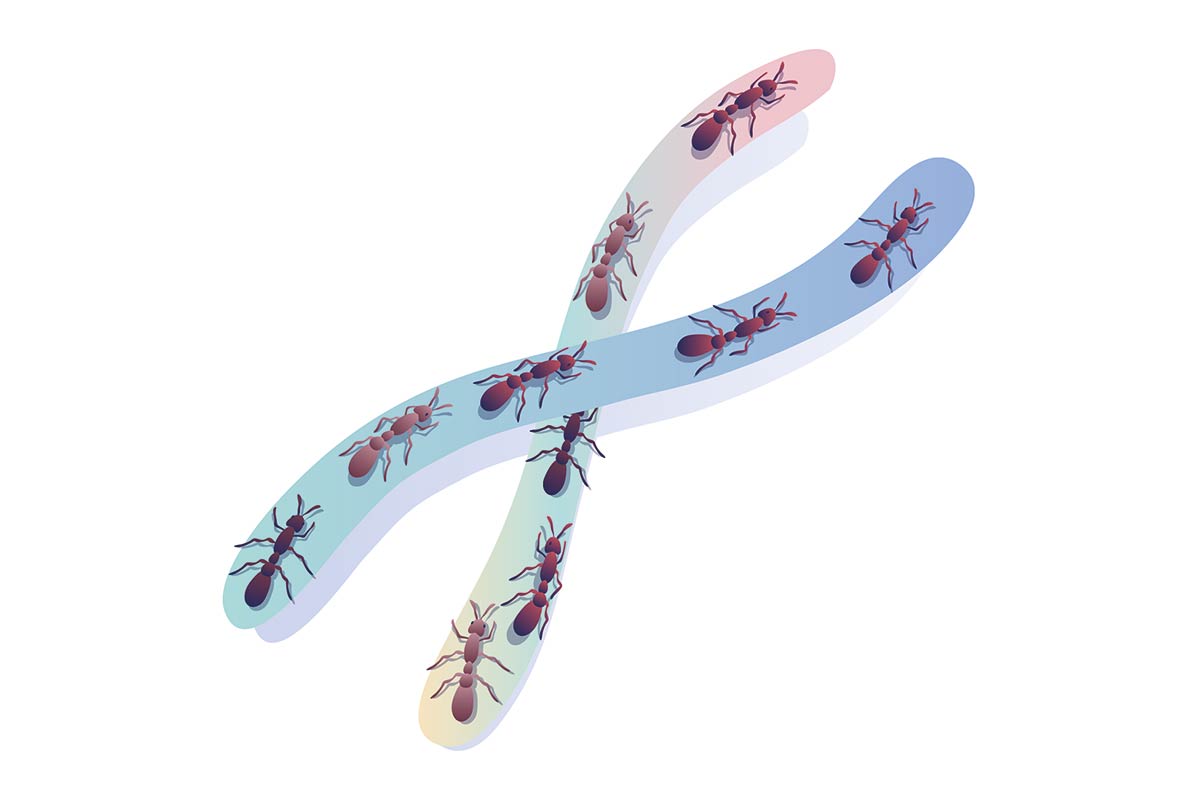
“We can take thousands of genetically identical ants and put them in very different social environments and see how it affects their behavior,” Kronauer explains. “It’s like a massively scaled-up identical twin study.”
But first, his team had to develop ways to record brain activity from individual ants. By engineering the ants’ brain cells to light up with fluorescence when they become active, the researchers can now watch the animals’ brain activity in real time through powerful microscopes. Using this approach, Kronauer’s group found the particular clusters of brain cells that become active when an ant senses alarm pheromones—chemical signals used for communication. This is the first step towards deciphering the neural link between chemical signals and behavioral responses.
But Kronauer’s recent work has revealed something even more sophisticated: The neural representation of pheromones in the ant brain changes as the ants age and take on different roles. A young nurse ant responds differently to pheromones than an older forager, even though they’re genetically identical.Kronauer says that this could help explain the difference in behavioral tendencies between young and old ants, and he sees parallels with humans. Just as in ants, our preferences and inclinations change as we get older.
Much of his current work focuses on this broad question of how specialized functions evolve in a social species. In ants, the majority of the brain is devoted to processing chemical signals, similar to how large regions of human brains are dedicated to processing speech. Both represent evolutionary solutions to the same challenge: how to create complex societies through sophisticated communication.
“We’re interested in how that evolves,” Kronauer says. “How do you go from a solitary animal to something that has this rich communication system and complex society?”
Reading faces
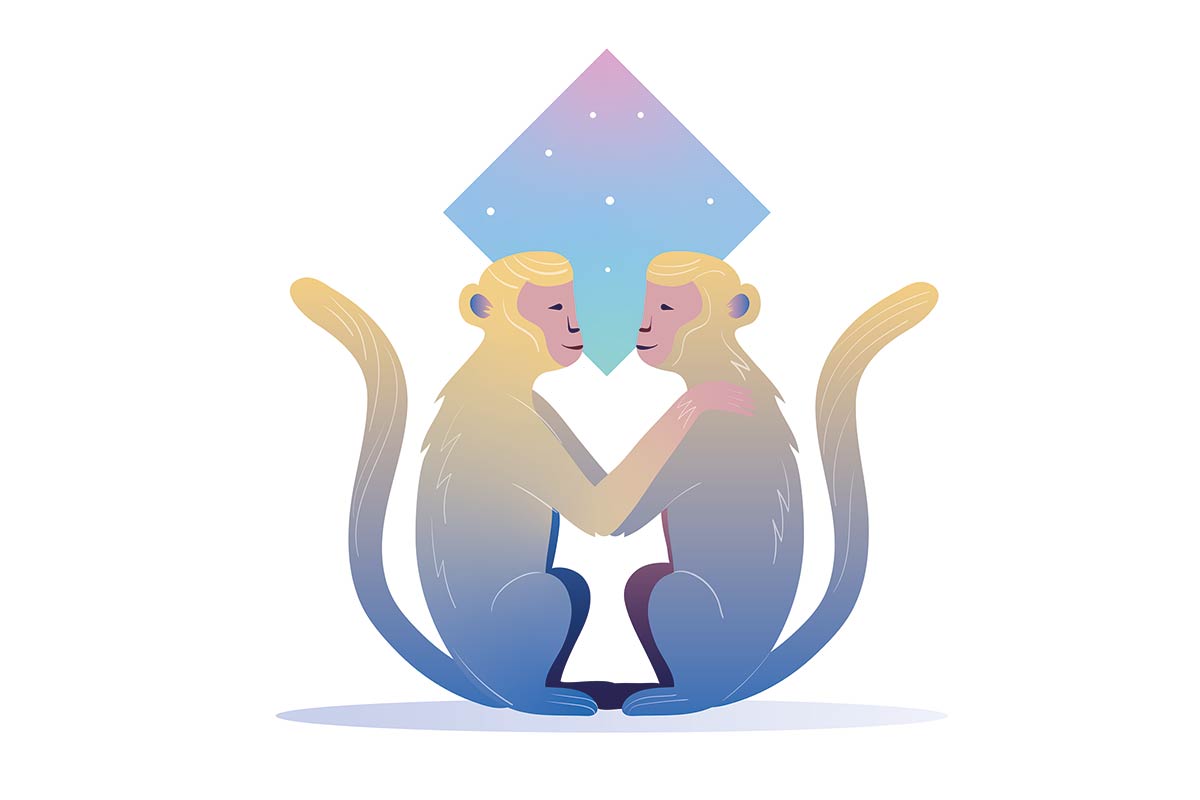
Just as a single alarm pheromone can commandeer an ant’s brain and trigger coordinated colony-wide action, primates have their own irresistible social signals. But instead of chemicals floating through the air, we rely on something far more complex: reading other people’s emotions through their faces and body language. When you catch the eyes of another person, for instance, it can hijack your emotional state, activate memories, and even force your own face muscles to mirror what you’re seeing.

This phenomenon captivated Winrich Freiwald as he watched interactions between the macaque monkeys in his Laboratory of Neural Systems. A dominant monkey’s threatening stare would instantly change the behavior of others nearby. A playful expression could shift the entire social dynamic of the group. Like Kronauer’s ants responding to chemical signals, the monkeys seemed unable to ignore these visual cues.
“When you look at a face, that face manipulates you,” says Freiwald. “If a baby smiles at you, you have to smile back. You’re completely defenseless against this. It actually alters your emotional state and can even control your motor system.”
“When you look at a face, that face manipulates you.” Freiwald
In his work with macaques, Freiwald homed in on what he calls a “mini-brain”—a contained and interconnected area of brain cells in primates that evolved just to process faces. In monkeys, this system is as large as a mouse’s entire brain, but it’s dedicated to just one task: extracting social information from faces.
Within that mini-brain, Freiwald has mapped distinct specialized regions, each with its own role. Some clusters of brain cells help primates identify individuals they know, while some cells track where other animals’ eyes are looking or show activity when the monkeys watch social interactions between other sets of animals. Still others provide direct links between recognition and emotion—explaining why you might smile the instant you see a familiar face, or feel a sense of dread when you spot an ex-partner across a crowded room.
Freiwald thinks that instantaneous connection between what you see and what you feel could offer a new way to understand the deepest core of human emotions. He already knows which brain cells are active with face recognition; probing what circuits those cells connect to when someone feels a rush of emotion would help him map the brain’s emotional
wiring.
“What really is a feeling?” Freiwald says. “We don’t know a lot about what happens in the brain when we experience emotions, and that makes it very difficult to understand conditions like depression.”
But a new understanding of exactly which brain cells are activated with emotions—like sadness, hope, and trepidation—could dramatically advance treatments for depression. By mapping the individual circuits where seeing becomes feeling, Freiwald envisions an approach capable of homing in on specific targets within specific regions using techniques like deep brain stimulation. Precisely placed electrodes could boost activity in just those areas of the brain to restore healthier emotional responses.
“Major depressive disorder is so destructive, and it’s become so prevalent,” says Freiwald. “But it’s also a challenge that I think, through basic research on the brain, we’re getting closer to being able to solve.”
Learning to communicate
For a handful of the most social species, like humans, reading faces isn’t the only thing that forms the backbone of the rich information networks that hold societies together. We have also developed ways to carry out back and forth exchanges of information with our voices. Understanding how this vocal communication evolved, and how it’s wired in the brain, could reveal the biological foundations that made human civilization possible.
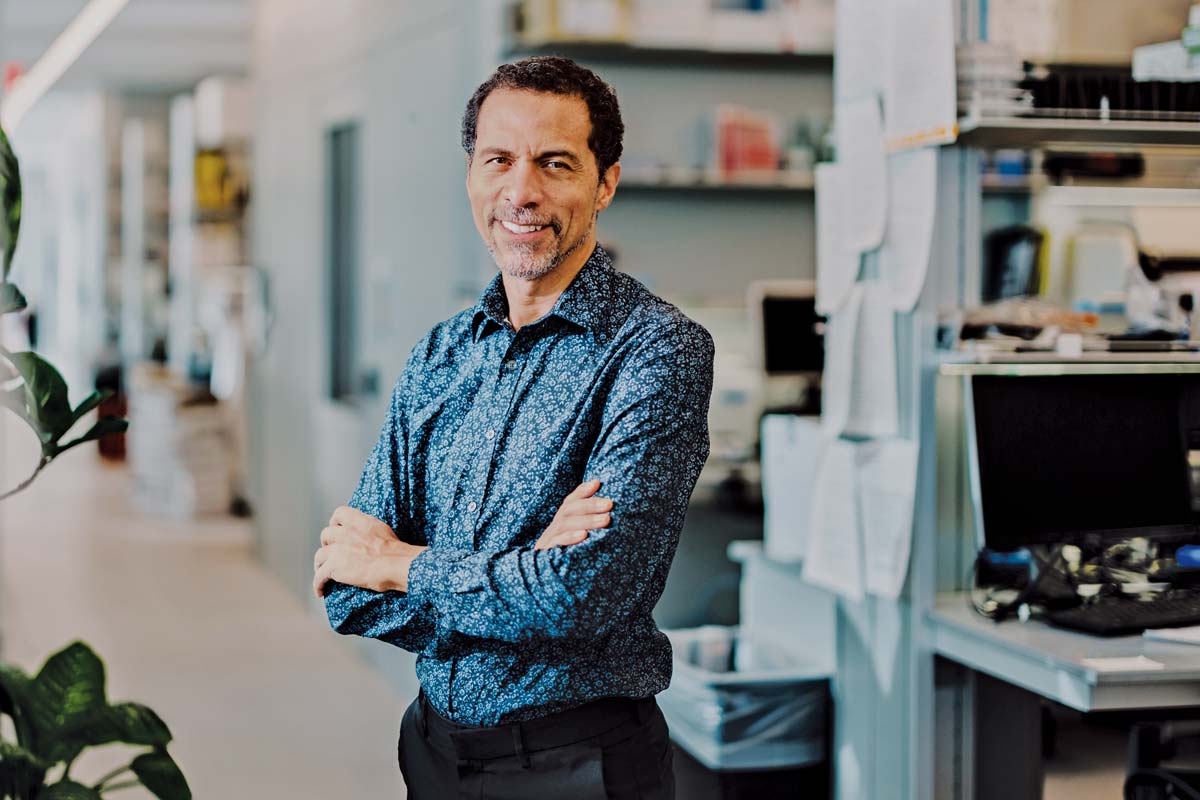
“The ability to imitate sounds likely started out as a way to show others how intelligent an individual is,” says Erich D. Jarvis, head of the Laboratory of Neurogenetics of Language and investigator at the Howard Hughes Medical Institute, pointing out that in certain bird species, males that can make more complex sounds are selected for in mating. “But, over time, in some organisms, it evolved into a way of communicating much more complex social messages.”
Most species are born with a fixed set of vocalizations; a dog’s bark or a cow’s moo don’t change much throughout their life. But for those known as vocal learners—a limited set of animals including humans, songbirds, parrots, dolphins, whales, and some bats—learning to produce new sounds represents a unique evolutionary adaptation and signals more flexible cognitive abilities.
“The evolution of spoken language is associated with more complex cognitive behaviors.” Jarvis
For years, Jarvis has used songbirds to study how the brain allows vocal learning. His lab has uncovered what parts of the birds’ brains help them learn new songs and has shown that songbird species with more advanced vocal learning abilities are also better problem solvers and have larger brains. Most recently, his group has found that only vocal learning species can learn to dance, synchronizing their movements to a musical beat.
But there is a larger lesson that ties Jarvis’ various findings together: Vocal learning comes as a cognitive package deal. Species that can imitate sounds have more direct connections between a brain region involved in learning (the cortex in the forebrain) and brain cells that control movement (motor neurons in the brainstem).
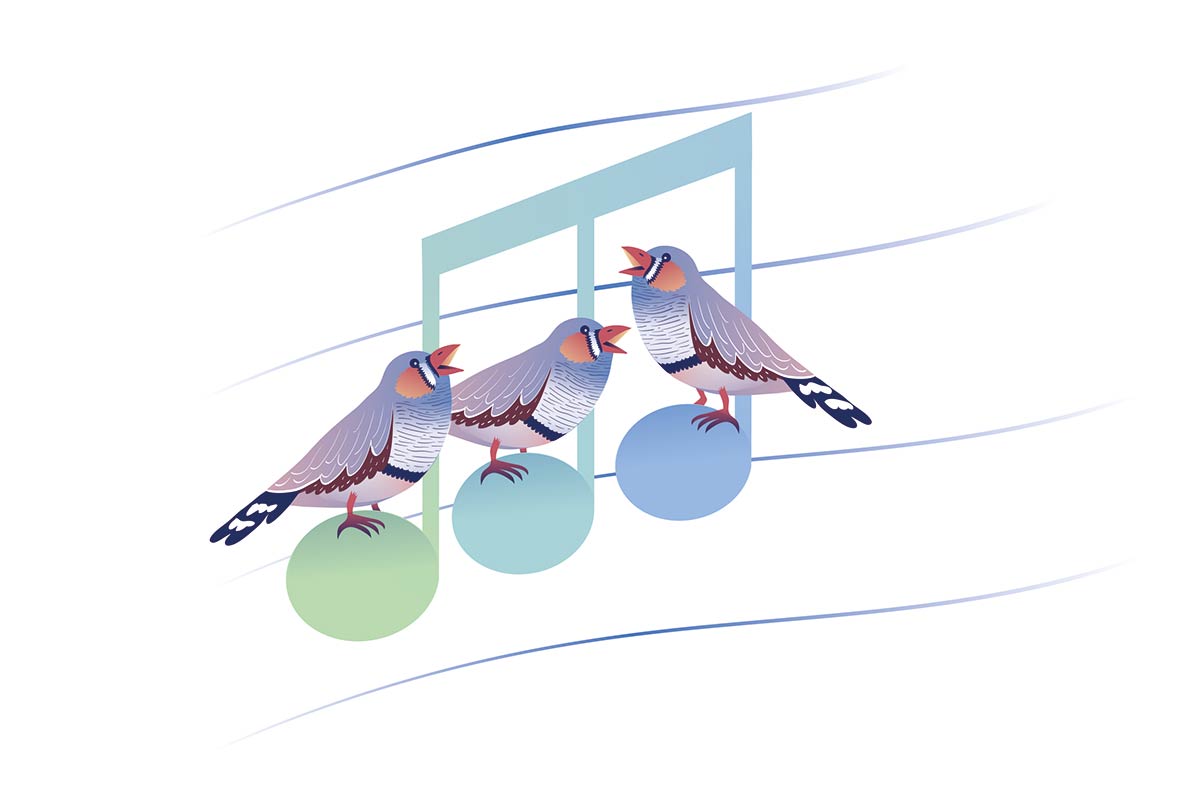
“The evolution of spoken language is associated with more complex cognitive behaviors,” Jarvis says. “These genetic changes with vocal learning are influencing other cognitive pathways, which may help explain how spoken language allowed human
civilization to flourish.”
For Jarvis, vocal learning and language aren’t quite the same thing, though they’re deeply connected. It appears that the ability to hear sounds and reproduce them lays the biological foundation that makes complex spoken language possible. In other words, the brain circuits that allow a songbird to learn new melodies are evolutionarily related to those that let humans learn to speak.
But his research goes beyond just understanding how we communicate through sound. He’s learning how the same genetic pathways that enable vocal learning also seem to enhance other cognitive abilities—pattern recognition, problem-solving, even the ability to learn dance rhythms.
“We think vocal learning is a window into how the brain adapts and forms new connections,” Jarvis explains.
Understanding how brains learn to imitate sounds could shed light on how to boost the brain’s ability to learn other things, communicate better, or heal. To achieve this, Jarvis has turned to mice—normally not a vocal learning species. But in his lab, genetically modified mice are doing something that should be impossible: They’re producing more complex sounds and sequences of sounds. When he plays back the animals’ ultrasonic vocalizations, the females prefer more complex sounds.
“When you pitch it down to our range, mice’s ultrasonic vocalizations almost sound like songbirds’,” says Jarvis.
The key to the mice’s melodies: Jarvis and his team locally shut off a gene in the brain that usually prevents connections between their forebrain and motor neurons. Without the gene, the mice’s forebrain cells grew new, humanlike connections, the animals modified the control of their vocal muscles, and then they started producing more complex sequences.
Next, Jarvis wants to study humans more directly, using MRI scans to gauge brain activity in people as they imitate new phrases or songs. That’s part of his research with the Price Center’s support.
“Very few people have studied the mechanisms of vocal learning in human brains,” he says. “They study speech production and processing, but not the actual imitation of sounds.”
The research has immediate clinical relevance. Stroke patients who lose language abilities can sometimes recover through intensive practice. Jarvis learned that bird brains with damaged song-learning regions initially caused the animals to stutter. But, over months, these birds gradually recovered, as new neurons integrated into the damaged circuits. Understanding this repair process could improve rehabilitation strategies.
A potential connection to autism is equally compelling: Many genes the Jarvis team has identified in vocal learning pathways show variations in children with autism, potentially explaining communication difficulties. These findings could eventually point toward treatments that strengthen or repair these brain circuits.
The attention filter
Picture a father chatting with his toddler as they walk across a busy street. A car suddenly speeds around the corner; he instantly stops talking and pulls the child closer. It’s a split-second shift that requires the brain to filter out one stream of information and amplify another—a process called sensory gating that happens thousands of times a day. Without this ability, every sound, sight, and sensation around us would compete equally for our attention, making it impossible to focus on any one thing.

“This ability to quiet distracting inputs while amplifying important ones is crucial for navigating social situations,” explains Priya Rajasethupathy, whose Laboratory of Neural Dynamics and Cognition studies memory and attention. “You need it to focus on a friend’s voice in a noisy restaurant, or to notice when someone’s facial expression shifts during a conversation.”
When sensory gating fails, social interactions become overwhelming. People with autism often describe feeling bombarded by sounds or textures that others barely notice. Those with schizophrenia may struggle to distinguish between external voices and internal thoughts. Even ADHD can make it difficult to track group conversations or pick up on subtle social cues, raising questions about how our increasingly noisy environment might be affecting many people’s social abilities.
“The ability to quiet distracting inputs while amplifying important ones is crucial for navigating social situations.” Rajasethupathy
Rajasethupathy became interested in these connections when a graduate student in her lab, Zachary Gershon, started studying attention in mice. Some animals were clearly better at filtering distractions than others. When trained to respond to specific tones for food rewards, focused mice reacted quickly, while others were slower to notice the cue. Working with hundreds of genetically diverse mice, Gershon scanned the genome and pinpointed one gene that had a large contribution to their attention: Homer1. Mice with lower levels of Homer1 were much better at focusing and faster to earn their reward.
“What was really striking to us is that most drugs for ADHD stimulate the brain,” says Gershon. “But Homer1 works by quieting the noise in the brain. In both cases, you’re changing the signal-to-noise ratio, but this gene is doing that in a different way.”
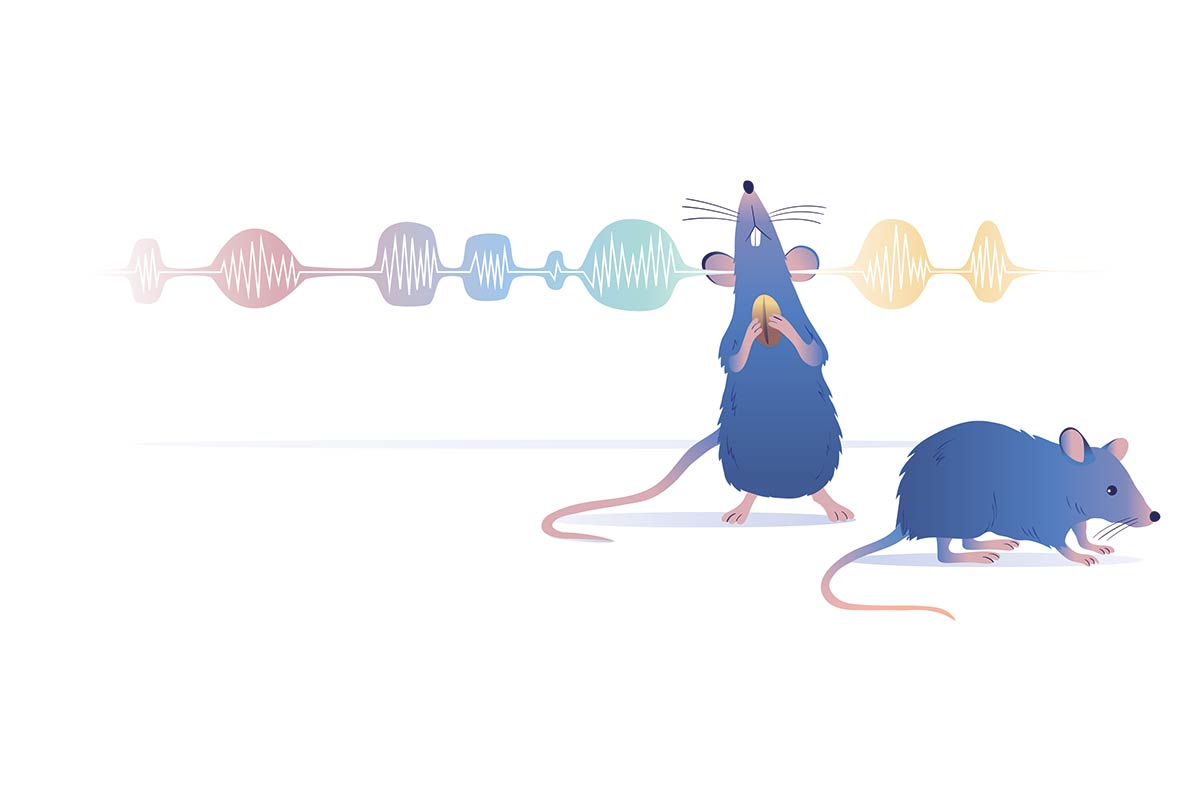
Gershon notes that humans with ADHD often have mutations in genes that work alongside Homer1. Homer1 itself is rarely altered in these conditions, but the genes it partners with—like spokes connected to a central hub—often are. In addition, the gene is associated with schizophrenia and autism in humans, suggesting that early dysfunctions in sensory gating may underlie a range of symptoms including hypersensitivity, hallucinations, and social-motor compensations. Homer1, Rajasethupathy says, could be altered with therapeutics in the future.
“For patients where stimulants are not effective, or have ceiling effects, Homer1 may be an effective alternative target,” she says.
To test that theory, postdoc Manoj Kumar is growing human cells into small clusters of neuronal tissue, referred to as 3D brain organoids. By adjusting Homer1 levels in these human brain organoids and measuring their electrical activity, researchers can study exactly how the gene filters neural signals to noise and whether pharmacological compounds can mimic this effect.
The Rajasethupathy lab is also using such human brain organoids to test the function of genes they’ve identified as key to memory processing. The organoids provide a way of confirming whether genes identified in mouse studies work similarly in the human brain. They also provide a high throughput platform to identify new pharmacological compounds to target these genes, which may be helpful with memory disorders, or even the normal forgetfulness of aging.
The research on attention and memory both reflect something deeper. Many psychiatric conditions that we consider social disorders may actually stem from disruptions in the fundamental brain processes that make social interaction possible. If sensory gating develops abnormally early in life, for instance, Rajasethupathy suspects it creates a cascade of other problems; children with autism or attention deficit disorders who can’t filter distractions struggle to focus on faces, voices, and social cues during times their brains should be learning to navigate our social world. And that potentially exacerbates difficulties that then persist into adulthood.
“A huge part of our cognitive capacity is meant to serve our social function,” notes Rajasethupathy. “So much of what we use these systems for is social.”
Lessons from fruit flies
Over hundreds of millions of years, evolution has run the same experiment again and again: How do you wire a brain for social life? The solutions are wildly diverse—chemical communication in ants, vocal learning in songbirds, face processing in primates. Yet beneath this diversity lie shared principles that different species use to predict, communicate, and cooperate.

That’s why Ruta’s choice animal model—tiny Drosophila fruit flies—makes perfect sense for asking big questions about social behavior. Their brains contain only 100,000 neurons, yet they court mates, compete for territory, and make split-second social predictions. By studying how such a simple brain accomplishes sophisticated social feats, Ruta can identify the essential computational building blocks that likely operate in all social species, including humans.
Ruta, head of the Laboratory of Neurophsiology and Behavior, is particularly interested in the innate, hardwired aspects of social behavior—the built-in circuits that don’t require learning. These are likely driven by ancient brain pathways that have remained largely the same between species and only produce distinct types of behaviors because of small evolutionary tweaks.
“What makes social interactions so valuable to study is that animals naturally engage in these rich social behaviors,” says Ruta. “In the vast majority of species, including flies, animals don’t have to be trained to fight or to mate.”
“The social brain has taken different forms in different animals, but I think there are several underlying themes that are highly conserved.” Ruta
Like Kronauer’s work with ants, Ruta has developed ways to measure fly brain activity during social interactions. Her lab also pioneered machine learning approaches to track how animals move with millisecond precision and developed virtual reality systems that let researchers control what a fly sees in its social environment while recording its brain activity. Using these techniques, she recently pinpointed the neurons that help male flies balance aggression and courtship when competing for mates.
“One of the things we have been really interested in is how the internal state of an animal shapes the way it responds to social cues in the environment,” explains Ruta.
It’s a phenomenon humans know well; when you’re in a good mood, a colleague’s neutral expression might seem warm and inviting, but when you’re already angry, that same expression can feel cold or dismissive.
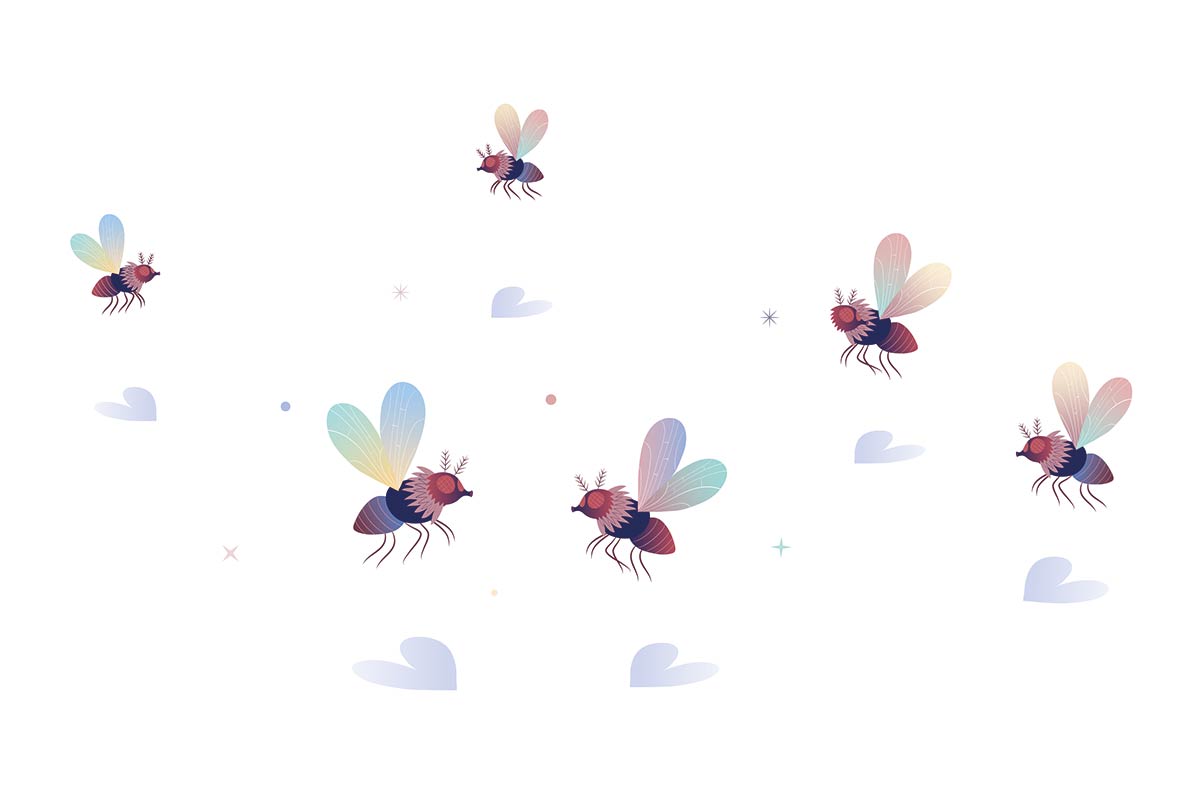
Her team showed how this kind of shift happens in the fly brain. Once male flies become sexually aroused, Ruta discovered, they perceive even simple moving targets—like two-dimensional dots projected onto the floor—as potential mates. In the flies’ brains, it turned out, visual neurons became more sensitive during this time.
In ongoing experiments, her lab is exploring how, during courtship, male flies don’t just react to females; they predict where females will move next and position themselves accordingly. It’s a rudimentary form of the same social prediction that lets you anticipate when someone will finish speaking or where a friend will sit at a familiar table.
“The social brain has taken different forms in different animals, but I think there are several underlying themes that are highly conserved,” says Ruta. “These basic building blocks of what a social brain has to carry out—communication and coordination—are the same across social species.”
Understanding how fly brains carry out these social calculations might eventually hint at how primate brains accomplish similar feats. The more basic principles emerging from her fly studies—like how they integrate different pieces of information in order to make split-second decisions—likely apply across the animal kingdom.
Labs in conversation
From the chemical trails that coordinate ant colonies to the neural circuits that help humans decode facial expressions, a common thread runs through this research: deciphering how individual brains work together to create something larger than themselves. Just as social brains require constant communication between individuals, understanding those brains requires constant communication between researchers.
Each Rockefeller scientist approaches the puzzle from a different angle, but their insights converge, underscoring the ancient roots of the social brain. Kronauer, for instance, discovered that an ant version of oxytocin—the human “bonding hormone”—shapes ants’ social behavior. In brain pathways important for vocal learning in songbirds, Jarvis and his team have turned up some of the same genes Rajasethupathy’s team has discovered to be involved in memory in mice.
These kinds of links often emerge from casual conversations at meetings and seminars—as did the need for collaborative approaches to overcoming common technical obstacles. “The challenges we face in studying social behaviors are similar across species,” adds Ruta. “Whether you are tracking ants, flies, or primates, you need ways to quantify complex, dynamic behaviors and relate them to what’s happening in the brain.”
Recognizing this shared challenge, Price Center researchers have been pooling their expertise to develop tools that accelerate discoveries across the entire field. For instance, machine learning algorithms that track individual ants in a colony can be adapted to follow flies during courtship or monitor facial expressions in monkeys.
And as each discovery lays the foundation for the next, their collective work further illuminates one of the most entrancing mysteries in neuroscience.
“You will never see or hear or touch or taste anyone else’s thoughts or feelings or intentions, but you’re making all these inferences,” Freiwald notes. “The most complex thing for your mind to understand is the mind of someone else. Because that mind is just as complex, and as you’re trying to understand it, it’s trying to understand you.”
Such is the marvel of our social brain.